
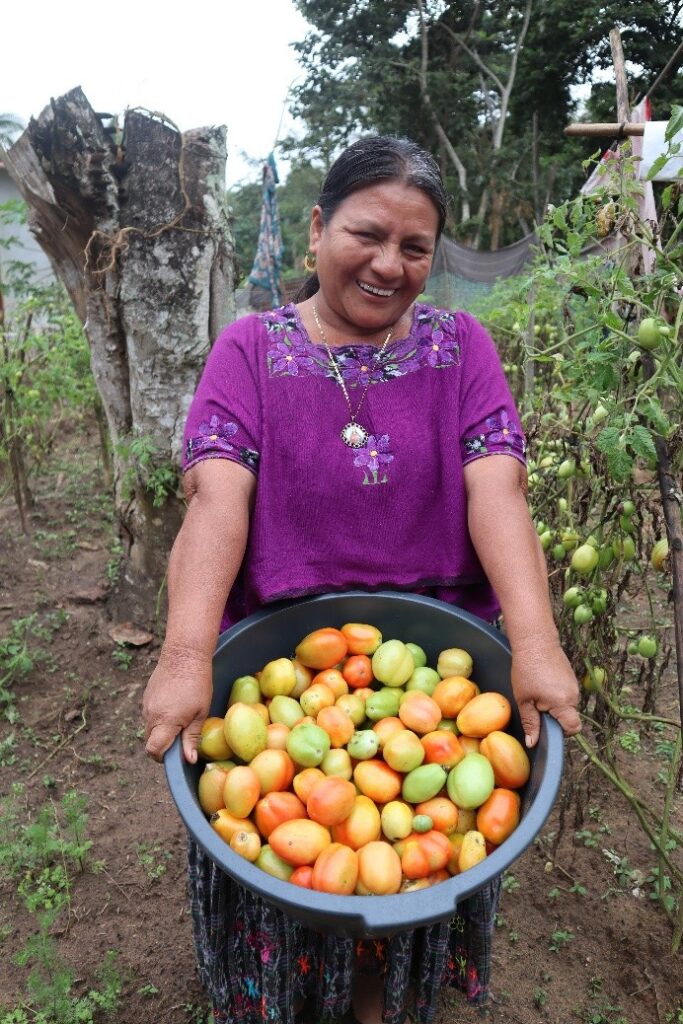
A New Experience: Dry Season Vegetable Production
In May, there had been no rain at all for several months, and the temperature was 118 degrees. The dry season in this part of Guatemala lasts for six months, and production always used to stop because of lack of water. This year, for the first time ever, family gardens are producing vegetables. The dryland ag techniques implemented by participant families have allowed them to keep going.
Participants have been learning about building chicken coops, making compost and organic pesticides, improving the soil with compost, mulching to retain moisture, seed saving, growing and using medicinal plants, and keeping bees for honey to sell. (In fact, eight beekeepers produced 1,100 gallons of honey to use or sell to the cooperative and family and friends.)
But the main focus has been on how to farm in conditions of extreme heat and drought. In addition to instruction and practice on conservation farming, program members received shading materials, water-storage barrels and manual pumps to irrigate gardens. These small changes have improved production in the communities.
Maria said, “We’ve not only learned how to make fertilizers and pesticides, but you’ve also motivated us to use these resources. I’ve never seen my garden so full. Now I have cilantro, green onion, tomato, mint and some peppers. During the dry season! Imagine!”
Lorenza said, “We used to farm, but gave it up at one point because we didn’t produce much. The sun dried up our gardens. It was difficult because we had to walk 15 minutes in the heat to fetch water to irrigate, and it just wasn’t enough. It was frustrating and tiring. Now look! We can’t pay you for your help, but we are truly very grateful.”
Guatemala Sayaxché Program
Led by World Renew