
Resilience in the Midst of Crisis
In Northwest Haiti, families are enduring one of the harshest years in recent memory. From climate shocks to economic isolation, the challenges are immense, but the stories emerging from this region also reveal strength, ingenuity, resilience and hope.
At the beginning of the year, delayed rains stalled the start of the growing season. Families who were able to grow something soon watched insects devour their seedlings because drought had eliminated other food sources. The second planting season in August began with hope, but flooding in September and Hurricane Melissa in October destroyed most plantain and cassava crops just as they were ready to harvest. At the same time, gang‑related roadblocks and violence further isolated the region, cutting families off from national markets and causing food prices to skyrocket.
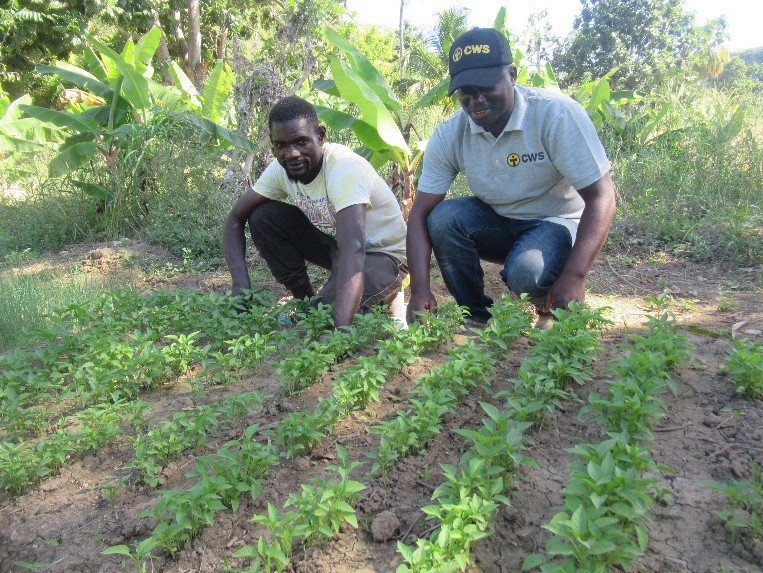
In the face of these overlapping crises, the program offered by local partner OPFSLDIBH has become a crucial support system, offering families the tools, training, and confidence they need to adapt. When drought forced insects to aggressively seek green crops, training on natural pesticides became vital. This allowed farmers to protect their fields without relying on expensive or unavailable chemical products. Michelet, said “For a long time, I have had insects ravaging my crops, with a negative impact on yield. However, based on this training, insects will no longer devastate my crops. I already started producing and using natural pesticide, with good results. Before, I had no means to combat pests.”
One of the greatest accomplishments of the past two years is the rehabilitation of the Dumercy natural spring, which had previously run dry but has now flowed continuously for two years. 41 people received specialized training in soil‑conservation techniques. Trained supervisors were joined by 195 manual laborers to apply those methods across 8 hectares surrounding the Dumercy source. Their work included the installation of rock walls, wattle fences, soil‑fixation barriers, and vetiver hedgerows—structures that held firm during both the floods and Hurricane Melissa. The spring now provides essential water for laundry, animals, and cooking. Around it, previously infertile land has been transformed. Families have planted plantains, taro, corn, and pumpkins, feeding their households and selling surplus at the Mare Rouge market.
Despite losing 96% of their fall harvests, living under gang‑induced isolation, and facing rising food costs, families in Baie‑de‑Henne are not giving up. They are rebuilding soil, restoring springs, adopting climate‑resilient farming techniques, and strengthening their small businesses.
Haiti Baie-de-Henne is led by Church World Service and local partner Organisation des Planteurs de Fond Saint-Luc pour le Développement Intégré de Baie-de-Henne (OPFSLDIBH)