
 Nepal Dhanpalthan
$28,597 needed of $99,728
Implementing Organization
Mennonite Central Committee (MCC)
Program Summary
Dhanpalthan rural municipality is located in the southern plains of Nepal, near the border with India. This area is flat and has a tropical climate. It is home to a diverse group of marginalized people who lack access to opportunities.
This program builds on the successes of a previous program in the neighboring rural municipality of Jahada. It is working to improve the current conditions of marginalized groups by creating opportunities for socio-economic transformation and better livelihoods.
The program is organizing farmers into community-based organizations (CBOs) and introducing a small-scale savings and credit mechanism to help members access seed money for income-generating activities. Additionally, capacity-building training is being designed to equip women with income-generating skills. They receive tools and seed money to establish their own enterprises, enabling them to sustain their daily livelihoods. To promote gender inclusivity, men are also actively engaged in project interventions, encouraging their support for women’s participation. Furthermore, the program advocates for and facilitates access to legal rights, such as citizenship, marriage, and birth registration, in collaboration with local government authorities.
The program also includes training and tools for a wide variety of income generating opportunities including: animal husbandry, fish farming, bee keeping, rice and vegetable farming using sustainable methods and more.
Many households in the program area lack safe and clean drinking water and the program is working to address this by installing drinking water tube wells throughout the area.
Success Stories
The Numbers Don’t Lie
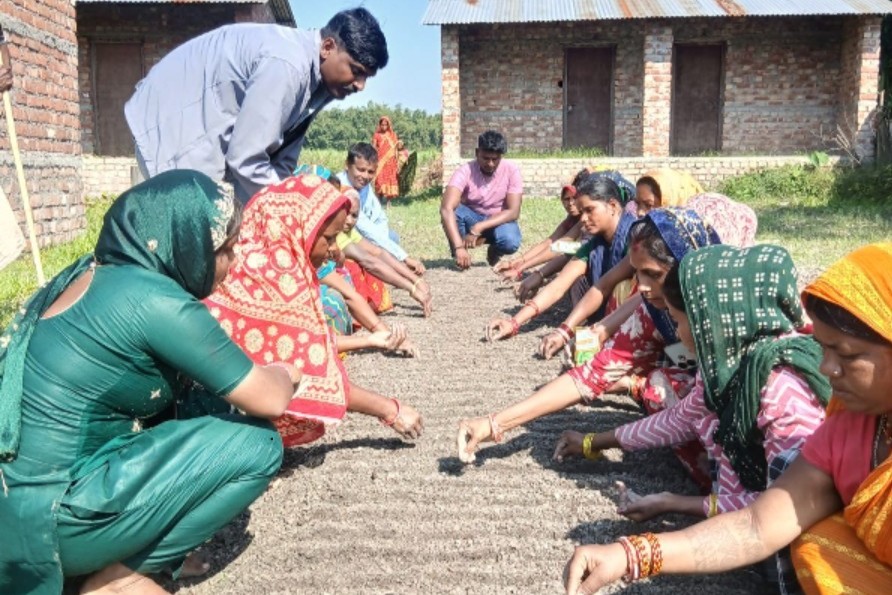
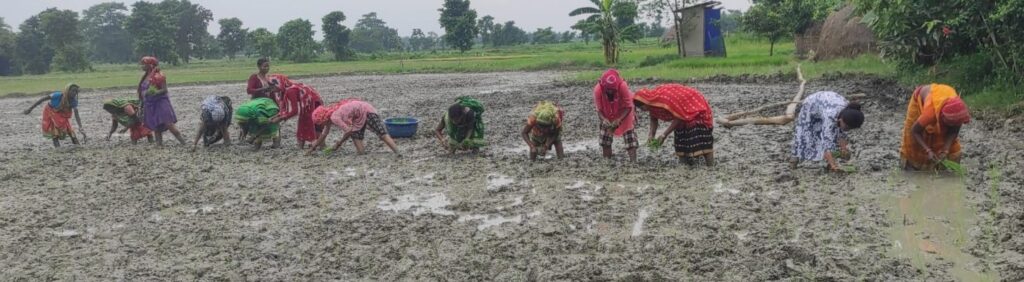
The Shree-Ram Women Farmer’s Group came together soon after the new Nepal Dhanpalthan program was launched in their area by local partner SAHAS Nepal in 2025. One of the first things this group of 30 women did together was to learn about the System of Rice Intensification (SRI), a scientific farming method aimed at increasing the yields of rice.
They had previously followed traditional rice cultivation methods which involve transplanting between four and eight seedlings in one spot, using 30–40-day-old seedlings fairly close together and keeping fields heavily flooded with water. SRI, by contrast, involves transplanting one seedling per spot, using 8-12-day-old seedlings, maintaining wider spacing, applying less water and ensuring timely weeding.
They planted a plot using the SRI method side-by-side with a plot using the traditional method. Each was about .015 acres in size. At harvest, they could easily see that the SRI method was more profitable.
| SRI Method | Traditional Method | |
| Seed | $0.15 | $0.42 |
| Organic Fertilizer | $4.15 | $4.15 |
| Land Preparation | $1.38 | $1.38 |
| Labor | $2.08 | $1.73 |
| Land Rent | $1.73 | $1.73 |
| Total Cost | $9.49 | $9.41 |
| Rice Yield | 60 KG | 50 KG |
| Rice Income | $12.05 | $10.04 |
| Straw | $0.69 | $0.52 |
| Total Income | $12.74 | $10.56 |
| Total Profit | $3.25 | $1.15 |
Rita, chair of the group, said “At first, we did not believe in this method and thought that all transplanted seedlings would die. To our amazement, those single seedlings were turned into 28-30 seedlings. The yield was also higher with this method which gave us more profit. So, we are very happy to learn about this scientific method and next year, we will adopt it.”
Nepal Dhanpalthan
Led by Mennonite Central Committee (MCC) and local partner SAHAS Nepal (Group of Helping Hands)