
 Paraguay Lower Chaco
$46,080 needed of $117,167
Implementing Organization
Church World Service (CWS)
Program Summary
The Gran Chaco region is an immense and little-heard-of region in the heart of South America. It is the biggest forest reserve on the continent after the Amazon and one of the largest dry forests in the world. A major ecosystem, it is also a region with great cultural diversity, home to 25 different indigenous ethnic groups including communities of Guarani, Wichi, Qom and Enxet Sur, who for centuries lived as semi-nomadic hunter gatherers before losing most of their land.
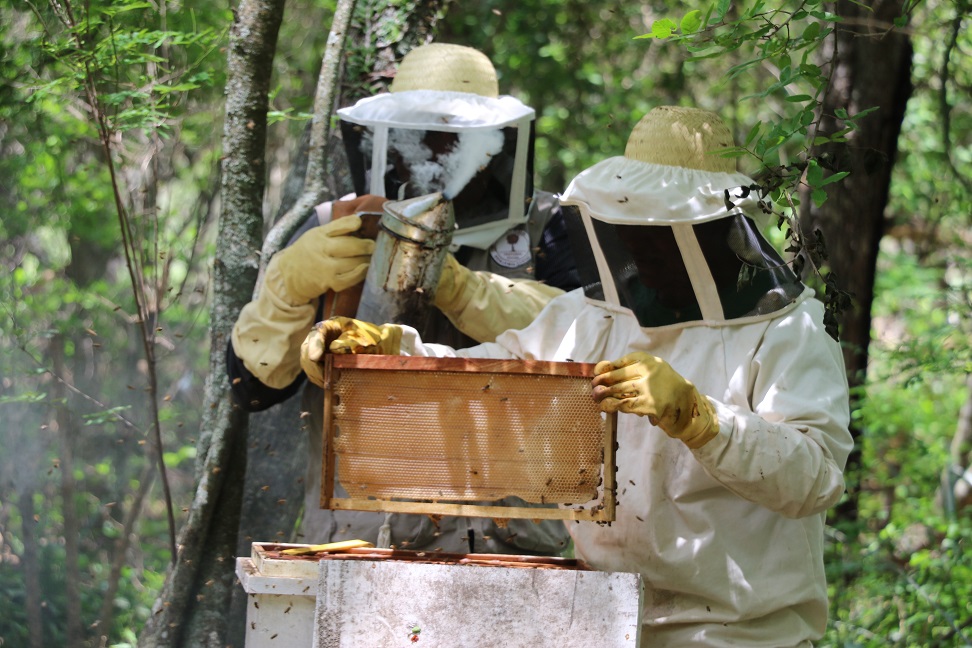
This program is a continuation of the ongoing work of Pastoral Social Diocesana de Benjamin Aceval to strengthen the development of indigenous communities of the Paraguayan Lower Chaco. Participants are learning to improve food security through regenerative practices in agriculture, livestock farming, and beekeeping. The program also focuses on water infrastructure, promoting the participation of indigenous women in water resource management decisions, promoting civic participation and facilitating community exchanges with institutions to increase access to basic services, and working with communities to identify and mitigate the risks posed to them by extreme weather events.
Estelvina's Story - Paraguay Lower Chaco
Genara's Story - Paraguay Lower Chaco
Success Stories
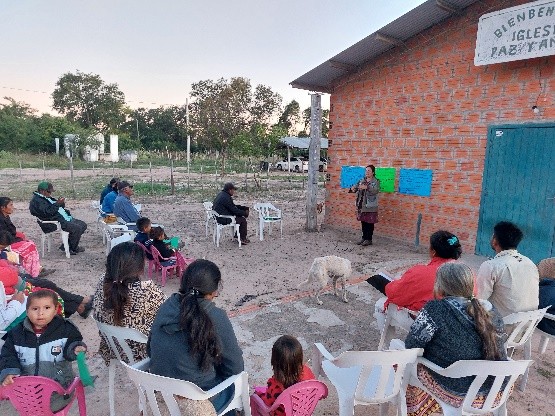
Indigenous Rights Outlined in Government Services Days
In addition to instruction and support in gardening, nutrition, income-generating activities, beekeeping, livestock, and climate issues, the program offers workshops to help the community better understand the government services they are entitled to.
This initiative has brought government services directly to the community, for example, help in applying for IDs. Getting a government ID is essential. Without an ID, access to other rights and government programs is severely limited. Service days have been helpful to program participants and have made community needs, realities and potential more visible to government representatives, creating a space for dialogue.
Several attendees spoke about their experiences. Here are the comments from two communities:
Cándido said, “I’m ready to fight for our Indigenous rights now, to carry them within me, and to follow the commandments of human rights. We’re all ready to join in and make our rights respected. It seems like now we have much more clarity on this topic. We’re giving more importance in our communities to defending what is right and to reporting what is wrong. Now that we know our human rights and how to stick up for ourselves, we will be able to guide ourselves more successfully.”
Aparicia spoke confidently directly to the government representative. “Our village has already received training on our rights, but what often happens is that the State itself violates the law. For example, my ID expired a year ago. I requested a new one, and they still haven’t delivered it. I can’t do any paperwork or apply for services because I’m missing my ID. We’ve also demanded access to drinking water and we still don’t have any. We Indigenous people suffer the most in this country. Without water, we can’t do anything: we can’t cook, we can’t bathe, we can’t water plants, and the children can’t bathe either. We want the government to fulfill your commitments to us.”
The events are very popular, because if you don’t know what you can ask for, you certainly won’t get it. Local partner Pastoral Social Diocesana de Benjamín Aceval has committed to holding these sessions across Lower Chaco because the need is so great.
Paraguay Lower Chaco Program
Led by Church World Service and Local Partner Pastoral Social Diocesana de Benjamín Aceval